Content Menu
● Understanding Filament and Moisture
● How Long to Dry Filament?
● Factors Affecting Drying Time
● Using a Food Dehydrator for Filament Drying
>> Step 1: Prepare Your Dehydrator
>> Step 2: Load the Filament
>> Step 3: Monitor Drying Process
>> Step 4: Store Properly
● Benefits of Using a Food Dehydrator for Filament
● Common Mistakes When Drying Filament
● Insights into Food Dehydration Techniques
>> The Science Behind Dehydration
>> Health Benefits of Dried Foods
>> Creative Uses Beyond Filaments
● Conclusion
● FAQ
>> 1. What temperature should I set my food dehydrator for PLA filament?
>> 2. How do I know when my filament is dry?
>> 3. Can I use my food dehydrator for other types of filaments?
>> 4. Is there a risk of damaging my filament while drying?
>> 5. How should I store my dried filament?
● Citations:
Drying filament in a food dehydrator is an effective method for ensuring optimal performance in 3D printing. This article will explore the process of drying filament, the factors affecting drying times, and provide a comprehensive guide on using food dehydrators for this purpose.
Understanding Filament and Moisture
Filament used in 3D printing, such as PLA, ABS, Nylon, and others, can absorb moisture from the air. This moisture can lead to poor print quality, resulting in issues like bubbling, stringing, and brittleness. Therefore, it is crucial to dry filament before use to maintain its integrity and performance.
How Long to Dry Filament?
The drying time for filament in a food dehydrator typically ranges from 4 to 6 hours at temperatures between 50°C to 60°C (122°F to 140°F). However, this can vary based on the type of filament:
- PLA: 4-6 hours at 40°C-50°C (104°F-122°F)
- ABS: 2-4 hours at 60°C (140°F)
- Nylon: Up to 12 hours at 70°C (158°F)
- PETG: 2-4 hours at 60°C (140°F)
It is essential to monitor the drying process closely to avoid overheating, which can damage the filament.
Factors Affecting Drying Time
Several factors can influence the drying time of filament in a food dehydrator:
- Humidity Levels: Higher humidity levels require longer drying times as more moisture needs to be removed.
- Filament Type: Different materials have varying moisture absorption rates and drying requirements.
- Filament Thickness: Thicker spools may take longer to dry due to increased moisture retention.
- Dehydrator Efficiency: The efficiency of the dehydrator itself can affect how quickly moisture is removed.
Using a Food Dehydrator for Filament Drying
Using a food dehydrator is an excellent option for drying filament due to its controlled temperature settings and airflow. Here's a step-by-step guide on how to dry your filament effectively:
Step 1: Prepare Your Dehydrator
1. Clean the Dehydrator: Ensure that the dehydrator is clean and free of any food residues that could contaminate your filament.
2. Set Temperature: Preheat the dehydrator to the recommended temperature for your specific filament type.
Step 2: Load the Filament
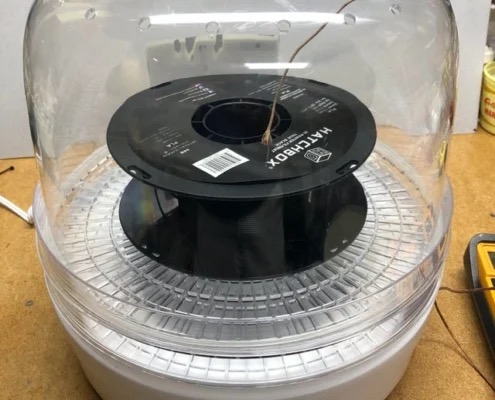
1. Remove Packaging: Take the filament out of its packaging and place it on the dehydrator trays. Make sure it is not touching other spools.
2. Use Desiccants: For added moisture control, consider placing desiccant packs alongside the filament in the dehydrator.
Step 3: Monitor Drying Process
1. Check Regularly: Monitor the drying process every hour or so. If you notice any signs of overheating or melting, reduce the temperature immediately.
2. Test for Dryness: After about four hours, check if the filament is dry by bending it slightly. If it bends without breaking, it may be ready.
Step 4: Store Properly
Once dried, store your filament in airtight containers with desiccants to prevent reabsorption of moisture. This will help maintain its quality until you are ready to use it again.
Benefits of Using a Food Dehydrator for Filament
Using a food dehydrator for drying filament offers several advantages:
- Controlled Environment: A dehydrator maintains consistent low temperatures that are ideal for drying without damaging materials.
- Energy Efficiency: Compared to using an oven, food dehydrators consume less energy while providing effective drying capabilities.
- Versatility: Besides drying filament, food dehydrators can be used for various foods like fruits, vegetables, and meats.
Common Mistakes When Drying Filament
To achieve optimal results when using a food dehydrator for filament drying, avoid these common mistakes:
- Overloading Trays: Placing too much filament in one batch can hinder airflow and prolong drying time.
- Ignoring Temperature Settings: Not adhering to recommended temperature settings can lead to inadequate drying or damage to the filament.
- Failing to Monitor Progress: Regularly checking on your filament during the drying process can help prevent overheating and ensure even drying.
Insights into Food Dehydration Techniques
Food dehydration has been utilized for centuries as a method of preserving various foods by removing moisture content that promotes spoilage. The principles behind dehydration are simple yet effective—removing water inhibits bacterial growth while retaining most nutrients and flavors within the food products.
The Science Behind Dehydration
Dehydration works by reducing water content through evaporation while maintaining lower temperatures than traditional cooking methods. This process not only extends shelf life but also concentrates flavors—making dried fruits taste sweeter and vegetables more flavorful.
When utilizing a food dehydrator:
- Airflow is crucial; ensure that items are spaced adequately on trays.
- Uniform size of items leads to even dehydration; cutting fruits or vegetables into similar sizes helps achieve this goal.
Health Benefits of Dried Foods
Dried foods offer numerous health benefits:
- They retain most vitamins and minerals compared to some cooking methods where nutrients may be lost.
- They provide concentrated sources of energy which are particularly beneficial for active individuals or those engaging in outdoor activities like hiking or camping.
Moreover, homemade dried snacks allow full control over ingredients—eliminating additives often found in store-bought versions.
Creative Uses Beyond Filaments
Food dehydrators are versatile tools that extend beyond just preserving foods or drying filaments:
- Create homemade fruit leathers by pureeing fruits with minimal sugar or preservatives.
- Prepare jerky from lean cuts of meat seasoned according to personal preferences.
- Experiment with herbs by making homemade seasoning blends that enhance culinary dishes without artificial flavors or preservatives.
Conclusion
Drying filament in a food dehydrator is a practical and efficient method for ensuring high-quality prints in 3D printing. By following the recommended guidelines regarding temperature and time based on filament type, users can significantly improve their printing experience.
FAQ
1. What temperature should I set my food dehydrator for PLA filament?
For PLA filament, set your food dehydrator between 40°C and 50°C (104°F - 122°F) and dry for about 4-6 hours.
2. How do I know when my filament is dry?
You can test if your filament is dry by bending it slightly; if it bends without breaking or snapping, it's likely dry.
3. Can I use my food dehydrator for other types of filaments?
Yes, you can use a food dehydrator for various filaments like ABS, Nylon, PETG, etc., but be sure to adjust the temperature and drying time accordingly.
4. Is there a risk of damaging my filament while drying?
Yes, overheating can damage filaments. Always monitor the temperature closely and avoid exceeding recommended settings.
5. How should I store my dried filament?
Store dried filament in airtight containers with desiccants to prevent moisture absorption until you are ready to use them again.
Citations:
[1] https://www.webstaurantstore.com/guide/741/food-dehydrators-buying-guide.html
[2] https://www.youtube.com/watch?v=TiFAk1NhISE
[3] https://www.backpackingchef.com/dehydrating-food.html
[4] https://www.bestbuy.com/discover-learn/10-reasons-to-buy-a-food-dehydrator/pcmcat1634332391134
[5] https://www.3devo.com/blog/3-ways-to-dry-filament
[6] https://www.cnet.com/pictures/tips-for-using-your-new-dehydrator/
[7] https://www.webmd.com/diet/dehydrating-food-good-for-you
[8] https://www.cnckitchen.com/blog/cyo43tzz88uqge65xgwz0wv8yvv3rs
[9] https://www.freshoffthegrid.com/dehydrating-food/
[10] https://www.inov3d.net/dehydrator-filament-dryer/
[11] https://brodandtaylor.com/pages/dehydrating
[12] https://www.reddit.com/r/3Dprinting/comments/r93l56/experiences_with_food_dehydrators_to_dry_filament/
[13] https://homesteadingfamily.com/preservation-101-intro-to-dehydrating-food/
[14] https://www.healthline.com/nutrition/dehydrated-food
[15] https://help.prusa3d.com/article/drying-filament_332086
[16] https://www.allrecipes.com/article/how-to-use-a-food-dehydrator/
[17] https://www.mitchellcooper.co.uk/10-alternative-uses-for-dehydrators
[18] https://www.youtube.com/watch?v=1ZRAVdqy990
[19] https://community.waring.com/blog/p/13or1/the-remarkable-benefits-of-adding-a-food-dehydrator-to-your-kitchen-arsenal
[20] https://www.goodhousekeeping.com/appliances/a31904157/what-is-a-dehydrator/
[21] https://www.commercialdehydrators.co.uk/post/best-practice-for-drying-fruit-and-vegetables-commercial-dehydrators


