Content Menu
● Introduction to Weed Dehydration Machines
● Types of Weed Dehydration Machines
>> 1. Adapted Food Dehydrators
>> 2. Industrial Cannabis-Specific Dehydrators
>> 3. Freeze-Drying (Cryo Cure) Systems
● Key Features to Evaluate
>> 1. Temperature and Humidity Control
>> 2. Airflow Design
>> 3. Energy Efficiency
>> 4. Safety and Compliance
● Step-by-Step Selection Guide
>> Step 1: Assess Your Production Scale
>> Step 2: Compare Drying Times
>> Step 3: Prioritize Terpene Retention
>> Step 4: Evaluate Maintenance Needs
● Top 3 Weed Dehydration Machines in 2025
● Cost-Benefit Analysis
● Conclusion
● FAQ
>> 1. How does a weed dehydration machine differ from a food dehydrator?
>> 2. Can I retrofit an existing food dehydrator for cannabis?
>> 3. What's the ROI for a commercial weed dehydrator?
>> 4. Do dehydrators eliminate the need for curing?
>> 5. How to prevent over-drying?
● Citations:
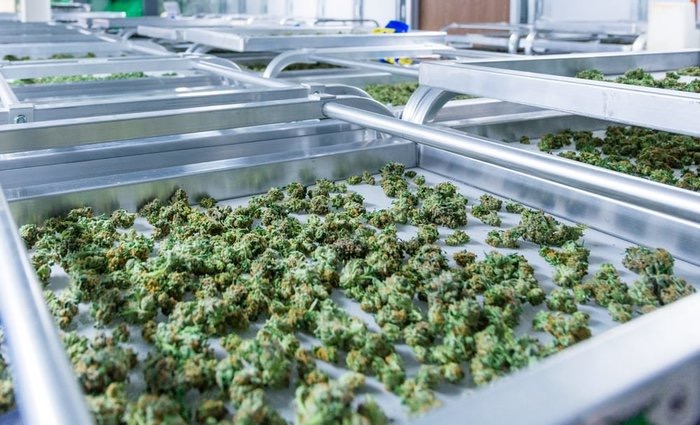
Selecting the ideal weed dehydration machine is critical for optimizing the quality, potency, and shelf life of cannabis products. This guide dives into technical specifications, operational best practices, and industry insights to help businesses make informed decisions. Below, we explore the types of machines, essential features, and actionable tips for maximizing efficiency.
Introduction to Weed Dehydration Machines
Weed dehydration machines are specialized equipment designed to remove moisture from cannabis buds while preserving cannabinoids (e.g., THC, CBD) and terpenes. Unlike traditional air-drying methods, these machines ensure consistency, reduce contamination risks, and accelerate production timelines. Modern models often incorporate technology adapted from food-grade dehydrators, refined to meet cannabis-specific requirements.
Types of Weed Dehydration Machines
1. Adapted Food Dehydrators
These machines, originally designed for fruits and herbs, are modified for cannabis use. They offer:
- Cost-effectiveness: Lower upfront costs (e.g., $200–$800 for models like the Excalibur 9-Tray Dehydrator).
- Adjustable Temperature Ranges: Typically 90°F–160°F (32°C–71°C).
- Limitations: May lack precision for large-scale cannabis operations.
2. Industrial Cannabis-Specific Dehydrators
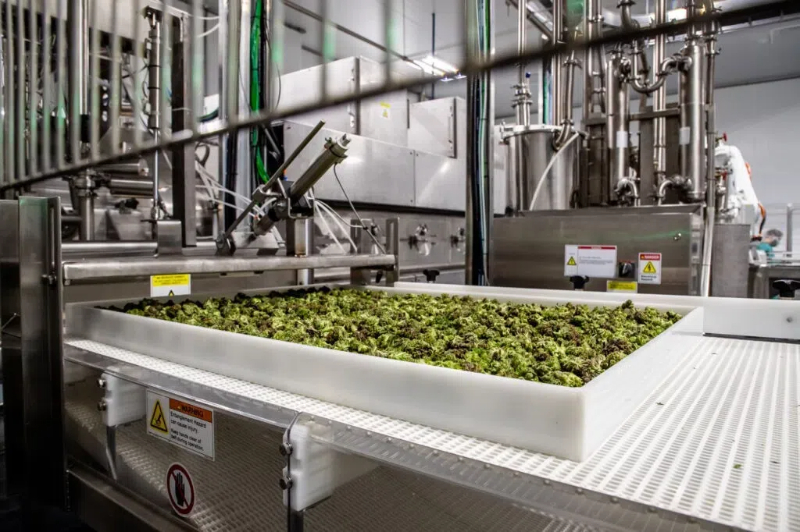
Purpose-built for commercial cannabis processing, these systems include:
- Precision Controls: Humidity and temperature sensors (±1°F accuracy).
- Scalability: Modular designs supporting 50–500+ lbs of biomass daily.
- Compliance Features: FDA/GMP-certified stainless steel construction.
3. Freeze-Drying (Cryo Cure) Systems
Freeze-drying technology locks in terpenes by sublimating ice crystals in a vacuum. Benefits include:
- Superior Product Quality: Retains 95%+ terpenes compared to 70–80% in traditional drying.
- Speed: Completes drying in 24–48 hours vs. 7–14 days for air drying.
- Drawbacks: High energy costs ($10,000–$50,000+ for commercial units).
Case Study: A Colorado facility reported a 23% increase in premium product yields after switching to freeze-drying.
Key Features to Evaluate
1. Temperature and Humidity Control
Optimal Ranges:
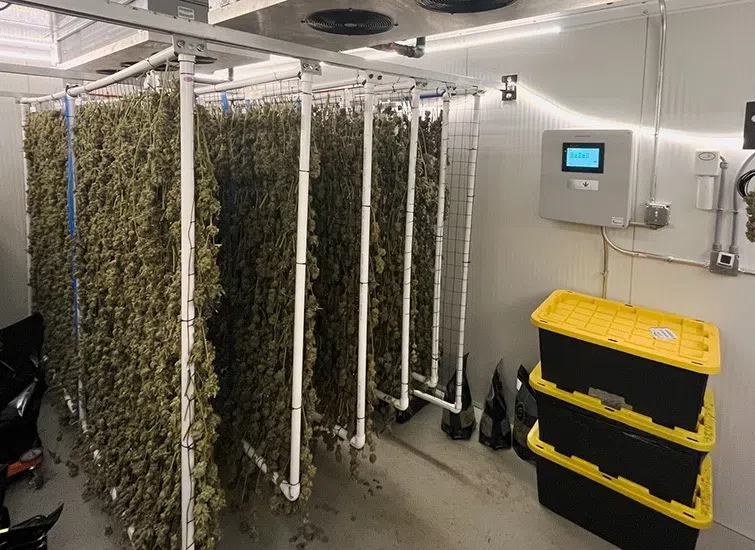
- Drying Phase: 60–70°F (15–21°C) with 45–55% relative humidity.
- Curing Phase: 70–75°F (21–24°C) with 58–62% humidity.
Technology: Look for PID controllers and IoT-enabled systems for remote monitoring.
2. Airflow Design
Horizontal vs. Vertical Flow:
- Horizontal systems (e.g., HerbsNow Dryer) prevent uneven drying by circulating air across trays.
- Vertical models (e.g., Nesco FD-1040) are space-efficient but may require manual tray rotation.
CFM Rating: Aim for 100–200 cubic feet per minute (CFM) for uniform airflow in large chambers.
3. Energy Efficiency
- Heat Pump Technology: Reduces power consumption by 30–50% compared to resistive heating.
- Solar Compatibility: Some industrial dehydrators (e.g., SolarDry 5000) integrate photovoltaic panels.
Calculation:A 10 kW dehydrator running 12 hours/day costs ~$15/day (at $0.12/kWh). Heat pumps cut this to ~$9/day.
4. Safety and Compliance
- Explosion-Proof Motors: Required for facilities using ethanol or other flammable solvents.
- Certifications: NSF, CE, or UL listings ensure adherence to safety standards.
Step-by-Step Selection Guide
Step 1: Assess Your Production Scale
- Small-Scale (<10 lbs/week): Compact dehydrators (5–10 trays).
- Commercial (>100 lbs/week): Industrial systems with conveyor belts or batch-processing chambers.
Step 2: Compare Drying Times
| Machine Type | Drying Time | Energy Cost per Cycle |
| Adapted Food Dehydrator | 3–5 days | $2–$5 |
| Industrial Dehydrator | 24–48 hours | $8–$15 |
| Freeze-Dryer | 18–36 hours | $20–$50 |
Step 3: Prioritize Terpene Retention
Terpene Preservation Techniques:
- Slow drying at low temperatures.
- Vacuum-assisted dehydration.
- Dark drying chambers to prevent UV degradation.
Step 4: Evaluate Maintenance Needs
- Daily: Clean trays and filters with food-safe sanitizers.
- Monthly: Inspect heating elements and fans.
- Annual: Replace gaskets and recalibrate sensors.
Top 3 Weed Dehydration Machines in 2025
1. CannDry Pro 360
- Capacity: 120 lbs/day
- Features: Hybrid heat pump + desiccant drying, 0.5°F temperature accuracy.
- Price: $28,000
2. HerbsNow Dryer
- Capacity: 5 lbs/batch
- Features: Stackable trays, 65°F max temperature.
- Price: $1,200
3. HarvestRight Freeze Dryer
- Capacity: 10–20 lbs/batch
- Features: Pharmaceutical-grade vacuum pump.
- Price: $3,500–$12,000
Cost-Benefit Analysis
| Factor | Adapted Dehydrator | Industrial Dehydrator | Freeze-Dryer |
| Initial Cost | $500–$2,000 | $10,000–$50,000 | $3,500–$50,000 |
| Operational Cost | Low | Medium | High |
| Terpene Retention | 70–80% | 80–90% | 95%+ |
| Best For | Small batches | Medium/large facilities | Premium products |
Conclusion
Investing in the right weed dehydration machine hinges on balancing scale, quality goals, and budget. Industrial dehydrators suit high-volume operations prioritizing efficiency, while freeze-dryers excel in premium markets. Always verify compliance with local cannabis regulations and prioritize machines with robust after-sales support.
FAQ
1. How does a weed dehydration machine differ from a food dehydrator?
While both remove moisture, weed dehydration machines offer finer temperature control (±1°F vs. ±5°F) and humidity sensors to protect cannabinoids.
2. Can I retrofit an existing food dehydrator for cannabis?
Yes, but limit temperatures to <115°F and monitor humidity with external hygrometers.
3. What's the ROI for a commercial weed dehydrator?
A $20,000 industrial unit processing 50 lbs/week can pay for itself in 8–12 months via reduced waste and faster turnaround.
4. Do dehydrators eliminate the need for curing?
No—curing (7–14 days in jars) is still required to enhance flavor and smoothness.
5. How to prevent over-drying?
Use machines with auto-shutoff at target moisture levels (e.g., 10–15% MC).
Citations:
[1] https://www.thespruceeats.com/best-food-dehydrators-4077285
[2] https://www.growweedeasy.com/review-herbsnow-dryer-for-drying-cannabis
[3] https://www.aimheatpump.com/a-news-can-u-out-marijuana-in-a-food-dehydrator
[4] https://www.youtube.com/watch?v=AQB9VxhELys
[5] https://www.youtube.com/watch?v=qtC36z0HleQ
[6] https://www.thepurposefulpantry.com/tips-for-buying-a-dehydrator/
[7] https://altaqua.com/weed-curing-machine/
[8] https://israelagri.com/cannabis-dehydrator/
[9] https://cryocure.com/machines/
[10] https://www.youtube.com/watch?v=F6n6mab1Z0Q
[11] https://www.youtube.com/watch?v=mtDzdYoyeR8
[12] https://www.reddit.com/r/microgrowery/comments/18zfklt/i_experimented_with_quick_drying_weed_in_a_food/
[13] https://homesteadingfamily.com/best-food-dehydrators/
[14] https://driflower.com/how-to-pick-the-right-cannabis-drying-equipment/
[15] https://www.istockphoto.com/photos/food-dehydrator
[16] https://www.istockphoto.com/photos/cannabis-drying
[17] https://www.youtube.com/watch?v=rR2G5UO-5Ms
[18] https://www.theoriginalresinator.com/blog/cannabis-drying-methods/
[19] https://brothersgrimmseeds.com/cannabis-drying-methods-comparison/
[20] https://www.theoriginalresinator.com
[21] https://www.youtube.com/watch?v=ULSMZfpNaMA


